

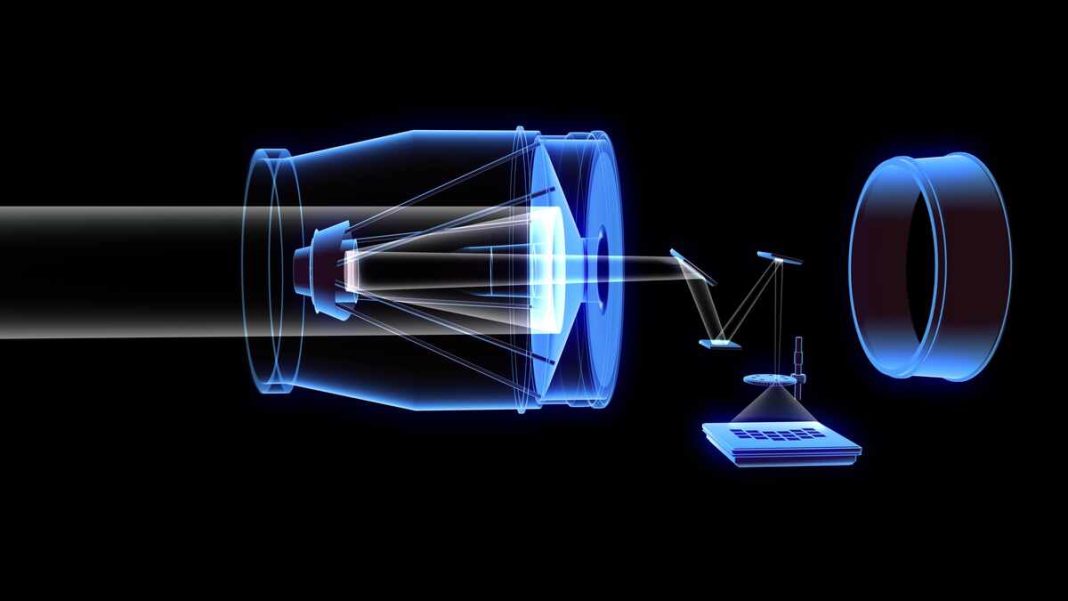

The upcoming launch of the Nancy Grace Roman Space Telescope marks one of the most anticipated milestones in modern astronomy. Developed by NASA, this next-generation observatory is set to revolutionize our understanding of the universe, pushing the boundaries of astrophysics with unprecedented precision and scale. As scientists prepare for its targeted launch window, the Roman Space Telescope is already being hailed as a game-changing mission that could reshape how we explore dark energy, exoplanets, and the large-scale structure of the cosmos.
Named after Nancy Grace Roman, often called the “Mother of Hubble,” the telescope carries forward her legacy of pioneering space-based astronomy. Unlike earlier missions, the Roman Space Telescope combines a wide field of view with the sensitivity of high-resolution instruments, allowing it to capture vast portions of the sky in a single observation. This capability sets it apart from observatories like the Hubble Space Telescope and even complements the more focused approach of the James Webb Space Telescope.
One of the most exciting aspects of the Roman Space Telescope is its ability to study dark energy, the mysterious force believed to be driving the accelerated expansion of the universe. By mapping billions of galaxies and analyzing cosmic structures over time, scientists hope to gain deeper insights into how the universe has evolved. This mission is expected to provide data at a scale never before achieved, offering clues that could redefine fundamental physics.
In addition to cosmology, the telescope will play a crucial role in the search for exoplanets. Using advanced microlensing techniques, it will detect planets that are otherwise invisible to traditional observation methods. This includes free-floating planets that do not orbit any star, as well as distant worlds located thousands of light-years away. The Roman mission could significantly expand the known catalog of exoplanets and help scientists understand planetary formation on a broader scale.
Technologically, the Roman Space Telescope represents a major leap forward. It is equipped with a Wide Field Instrument capable of capturing images 100 times larger than those taken by Hubble, while maintaining similar resolution. This means astronomers can conduct large sky surveys much faster and more efficiently. Additionally, its Coronagraph Instrument will enable direct imaging of exoplanets and study of planetary atmospheres, a feature that pushes the limits of current space imaging technology.
The targeted launch of this observatory also reflects the growing momentum in global space exploration. With increasing collaboration between scientific institutions and advancements in launch capabilities, missions like Roman are becoming more ambitious and impactful. The telescope is expected to operate from a stable orbit, allowing continuous observation without atmospheric interference, ensuring high-quality data collection over its mission lifetime.
As the launch approaches, the scientific community is preparing for a new wave of discoveries. From unraveling the mysteries of dark energy to identifying distant planetary systems, the Roman Space Telescope is poised to answer some of the most profound questions about our universe. Its success could pave the way for future missions and inspire a new generation of astronomers and researchers.
In many ways, the Roman Space Telescope is not just another space mission but a bold step into the unknown. It represents humanity’s enduring curiosity and determination to explore beyond our limits. Once operational, it is expected to deliver insights that will shape astrophysics for decades to come, making it one of the most significant observatories of the 21st century.