

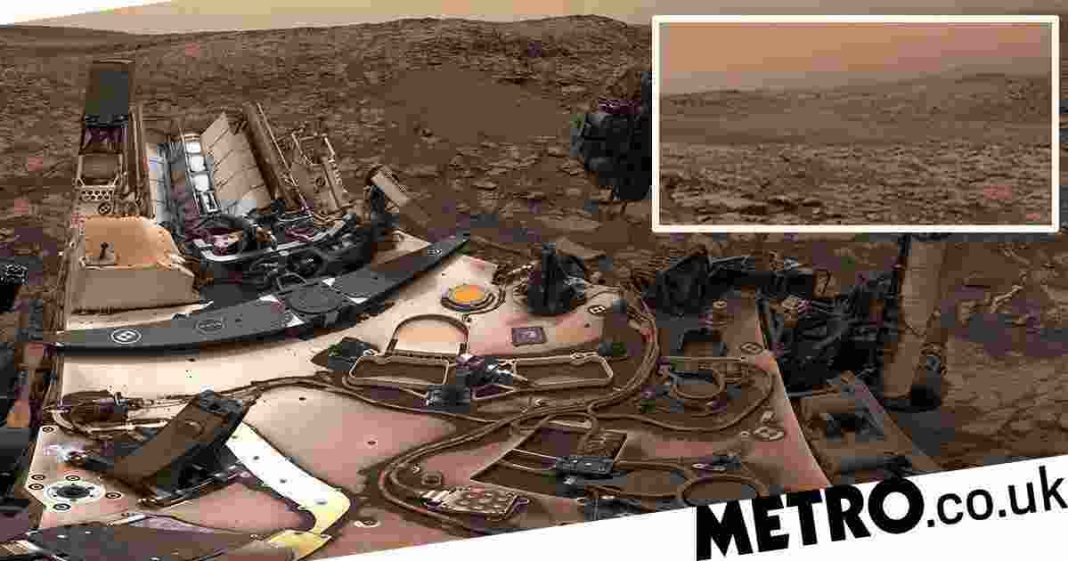

NASA’s Curiosity rover has delivered one of its most exciting scientific findings yet, uncovering the most diverse collection of organic molecules ever detected on the Red Planet. In a rock sample drilled six years ago, scientists identified more than 20 carbon-containing compounds, including seven that had never been seen on Mars before. The discovery, published on April 21, 2026, in the journal Nature Communications, marks a significant step forward in understanding the chemical environment of ancient Mars and brings researchers closer to determining whether the planet once hosted conditions suitable for life.
The breakthrough came from a unique wet-chemistry experiment performed by Curiosity’s Sample Analysis at Mars (SAM) instrument suite. In 2020, the rover drilled into a clay-bearing sandstone in the Knockfarrill Hill member of Glen Torridon, located within Gale Crater. This region formed in an ancient lakebed approximately 3.5 billion years ago, a time when Mars is believed to have been warmer and wetter with rivers and lakes on its surface. Instead of relying solely on traditional heating methods, the rover used tetramethylammonium hydroxide (TMAH) to dissolve and release preserved organic matter locked inside the rock. This first-of-its-kind approach on another planet allowed the detection of a much richer variety of molecules than previous dry pyrolysis experiments.
Among the 21 organic molecules identified, seven stood out as entirely new detections on Mars. These include complex aromatic compounds such as trimethylbenzene, tetramethylbenzene, methyl benzoate, dihydronaphthalene, naphthalene, benzothiophene, and methylnaphthalene. Notably, scientists spotted a nitrogen-bearing heterocycle, a ring-shaped structure considered a potential precursor to components of RNA and DNA. Benzothiophene, a sulfur-containing molecule also found in meteorites, represents the largest confirmed underivatized aromatic molecule indigenous to Mars. The presence of these diverse organics, preserved through billions of years of radiation and geological processes, highlights the protective power of clay minerals in Martian bedrock.
Lead researcher Dr. Amy Williams of the University of Florida emphasized the importance of the find. The molecules appear to be remnants of ancient macromolecular or free organic matter that survived extensive diagenesis. While the discovery confirms that Mars possessed complex carbon chemistry capable of supporting prebiotic processes, scientists stress that the compounds could originate from geological or meteoritic sources rather than biological activity. “Is it life? We can’t tell based on this information alone,” Williams noted, underscoring the need for further analysis and future missions.
This result builds on years of careful laboratory work both on Earth and aboard the rover. The SAM team compared the data against blank runs and clean-up procedures to ensure the detections were genuine and not contaminants. The diversity far exceeds previous organic finds by Curiosity, which had already detected simpler carbon molecules like methane and chlorobenzene in earlier years.
The implications extend beyond Mars science. Understanding how organic molecules persist in harsh extraterrestrial environments helps refine models for habitability on other worlds, including icy moons in the outer solar system. It also informs strategies for sample return missions, such as NASA’s Mars Sample Return campaign, which aims to bring Martian rocks back to Earth for detailed study in advanced laboratories.
Curiosity continues its long-term mission exploring Mount Sharp, climbing through layers of sedimentary rock that record billions of years of Martian history. The rover’s persistent mobility and sophisticated instruments keep revealing new clues about the planet’s past. As mission scientists analyze additional samples with the same wet-chemistry technique, they hope to map the distribution and origins of these organics more comprehensively.
This latest discovery reignites excitement in the search for signs of ancient life on Mars. While no direct evidence of biology has emerged, the rich chemical inventory in a once-habitable environment strengthens the case that Mars was chemically primed for life during its early history. Future rovers and orbiters, equipped with even more advanced life-detection tools, will build on Curiosity’s pioneering work to answer one of humanity’s most profound questions: Did life ever arise on our neighboring planet?
The findings remind us how much remains to be explored on Mars and how incremental breakthroughs like this one gradually illuminate the Red Planet’s hidden past.